Fencing Built to Define and Protect Property
Fence Installation in Dillon for properties requiring security, privacy, and lasting boundary definition
Prime-Line Fencing installs wood, aluminum, and ranch fencing designed to withstand Colorado's mountain weather conditions throughout the year. You see immediate improvements in property definition, security, and curb appeal once the fence line is established and posts are set to proper depth. Mountain properties require installation methods that account for freeze-thaw cycles, high winds, and snow load, which directly affect how long your fence remains structurally sound.
Fence installation begins with evaluating your property's layout, soil conditions, and intended use to determine the appropriate material and post spacing. Wood fencing provides traditional aesthetics and solid privacy screening, aluminum offers low-maintenance durability with decorative options, and ranch fencing manages large open areas while defining property lines. Each material responds differently to sun exposure, moisture, and temperature swings common in mountain environments, so matching the right fence type to your site conditions ensures years of reliable performance.
Schedule a fence installation estimate to review material options and layout designs for your property.
What Properly Installed Fencing Actually Accomplishes
Installation quality determines whether your fence stays upright through multiple winter seasons or begins leaning within two years. Posts must reach below the frost line, and concrete footings need adequate curing time before rails and panels bear full weight, particularly when installing on slopes or in areas with rocky soil composition. Corner and gate posts require deeper footings and additional bracing because they carry lateral stress that standard line posts do not experience.
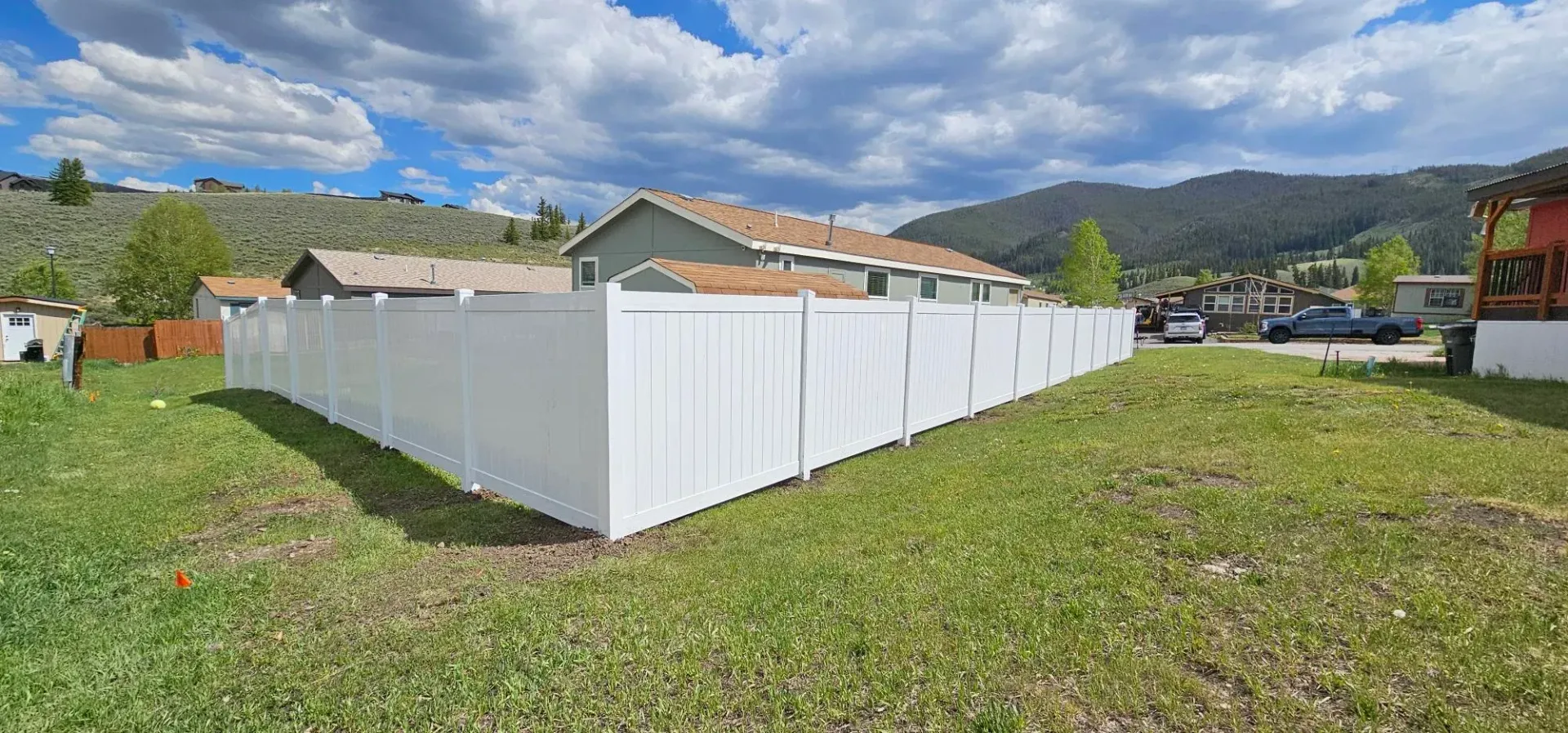
After installation completes, you notice clean sight lines along the fence run, gates that swing smoothly without scraping or binding, and panels that remain plumb even after heavy snow accumulation. Wood surfaces show consistent spacing between pickets, aluminum sections lock securely without gaps, and ranch rails sit level across long spans. The difference becomes obvious during the first winter when properly set posts resist frost heave while inadequate installations begin shifting.
Customized fence layouts address unique property features such as elevation changes, existing landscaping, utility easements, and access points for maintenance equipment. Prime-Line Fencing designs each installation to balance functional requirements with the visual outcome you expect, ensuring the fence enhances rather than detracts from your property's overall appearance.
What Property Owners Usually Ask
Mountain property owners often have specific questions about how fencing performs in Colorado's climate and terrain.
What material works best for mountain weather conditions?
Wood fencing requires regular staining or sealing to prevent moisture damage and UV degradation, while aluminum resists rust and maintains appearance with minimal maintenance. Ranch fencing uses treated posts and coated wire that handle temperature extremes without structural compromise, making material selection dependent on your maintenance preference and aesthetic priorities.
How does installation differ on sloped terrain?
Fencing on slopes requires either stepped panels that create a stair-step profile or racked panels that follow the ground angle, with post heights adjusted to maintain consistent top rails. The approach depends on slope severity and the visual effect you want, since stepped installations create distinct horizontal lines while racked fences flow with natural topography.
When should I schedule fence installation in Dillon?
Installation typically occurs between late spring and early fall when ground conditions allow efficient post digging and concrete curing, though some projects proceed during winter if soil remains workable. Scheduling earlier in the season provides more flexibility for project timing and material availability.
What determines fence post spacing?
Post spacing depends on fence height, material weight, wind exposure, and soil bearing capacity, with standard spacing ranging from six to eight feet for most residential applications. Aluminum fencing often allows wider spacing due to its lighter weight, while solid wood privacy fencing requires closer posts to resist wind load.
How long does a professionally installed fence last?
Wood fencing typically provides fifteen to twenty years with proper maintenance, aluminum fencing lasts thirty years or more without significant deterioration, and ranch fencing often exceeds twenty-five years when posts and wire receive appropriate initial installation. Lifespan varies based on material quality, installation standards, and ongoing upkeep.
Prime-Line Fencing provides detailed estimates that outline material specifications, installation methods, and project timelines specific to your property layout. Contact us to arrange an on-site evaluation and discuss how wood, aluminum, or ranch fencing meets your security and aesthetic requirements.